
About
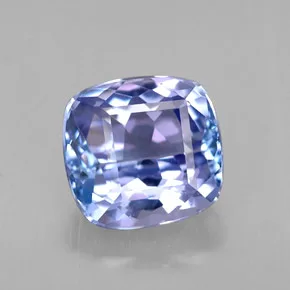
The main appeal of Tanzanite is its lovely color. Its color ranges from pure blue to purplish-blue. It is highly pleochroic, and will display different color saturation when viewed at different angles. Planning is required when faceting a Tanzanite gemstone in order to cut it at an angle that delivers the stronger blue color rather than the duller gray tone. Care must also be exercised during faceting to prevent chipping, since this gemstone has perfect cleavage in one direction. For this same reason, Tanzanite jewelry should not be banged against hard surfaces and should be worn carefully.
Tanzanite is a relatively soft for gemstone. This places somewhat of a limitation on its uses and care must be taken to protect it from being scratched. Tanzanite also has a low resistance to ultrasound and should not be cleaned with ultrasound cleaners as this may cause the gemstone crack. Although Tanzanite has a lovely color and appeal, it does have several limitations in its durability.
Advertisement
Uses
Varieties
✓ generally accepted · ✗ less commonly used
- Yellow Tanzanite— Rare yellow transparent Zoisite from Arusha, Tanzania. It is found in the same deposits associated with Tanzanite, and is essentially the same as Tanzanite except for its color which is different.