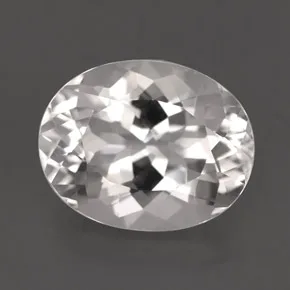
Goshenite is the white to colorless variety of Beryl. Beryl is
best known for its gem varieties Emerald and Aquamarine, as well as the lesser known Heliodor and Morganite, but the variety Goshenite less frequently used as a gemstone being that it lacks the color appeal of the other varieties.
About
All Goshenite gems are faceted from colorless crystals; white Goshenite is usually opaque and never used a gemstone. The name Goshenite originates from the type locality of Goshen, Hampshire Co., Massachusetts, where Goshenite was first described, but this locality has produced few specimens of interest. Since Goshenite is much more common than the other Beryl gem forms, only very clean and transparent specimens are faceted as gemstones. Goshenite is sometimes coated with a green foil and made to
resemble Emerald, as its physical properties are identical to Emerald.
Advertisement
Uses
Goshenite is used as a minor colorless gemstone, though it is more often faceted for collectors rather than for mainstream jewelry.
Treatments & Enhancements
Due to its relative availability and inexpensive prices, Goshenite gemstones are never treated or enhanced.
Sources
Goshenite is found in many of the Aquamarine localities, especially
in Brazil, Russia, Pakistan, China, Burma (Myanmar), and Namibia.
Similar Gemstones
Goshenite is similar to the other colorless gems such as Quartz, White Topaz, White Sapphire, and White Zircon. It can also resemble Diamond, but lacks the fire and dispersion and is also much softer.