
About
Advertisement
Uses
A compact, massive form called Hydrogrossular is sometimes used as carving gemstone and polished in cabochons. Hydrogrossular is usually greenish, but can also be pink and multicolored.
Varieties
✓ generally accepted · ✗ less commonly used
- Tsavorite— Green to emerald-green transparent variety of Grossular Garnet from Africa.
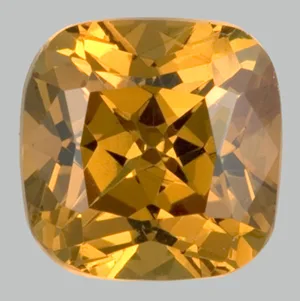
- Hessonite— Orange to orange-brown, transparent variety of Grossular Garnet.
- Gooseberry Garnet— Light green to light greenish-brown variety of Grossular Garnet.
- Hydrogrossular— Massive veins of opaque Grossular Garnet that resembles
Jade. It is white to light green in color, and may be colored in a
white, green, and pink combination. Hydrogrossular is often regarded as a variety of Grossular, but it is scientifically regarded as two distinct individual mineral species that have a slightly different chemical formula than true Grossular. Hydrogrossular is synonymous with the term Hydrogarnet. Other synonyms of Hydrogrossular include Transvaal Jade, African Jade, South African Jade, and Garnet Jade.
See the mineral page on Hydrogarnet for more information. - Imperial Garnet— Light pink, transparent gem variety of Grossular Garnet.
- Leuco-garnet— Colorless, transparent variety of Grossular Garnet.
- Mali Garnet— Garnet gemstone from the African country of Mali that ranges in color from green to yellow to brown (though most often a greenish-yellow). The deposit of these Garnets was discovered in Mali in 1994, and this form of Garnet is a relatively new gemstone. The scientific classification of the Mali Garnets are not clearly identified; they can be either Grossular or Andradite, though are usually an intermediary form closer in chemical structure to Grossular.
- Mint Garnet— Grossular Garnet with a light-mint-green color.
- Raspberry Garnet— Raspberry-red variety of Grossular Garnet.
- Rosolite— Light pink to raspberry-red variety of Grossular Garnet.