Scapolite is a common mineral, and its typical habit is in opaque and uninteresting forms. However, several unique localities provide gemmytransparent forms of this mineral, which make a rare and pretty gem. However, despite its lovely colors, Scapolite has been limited from becoming a more mainstream gemstone due to its relatively low hardness.
About
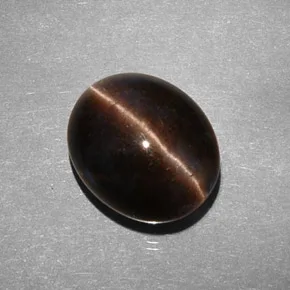
Several habits of Scapolite are used as gemstones. The main gemstone color is yellow, followed by purple. Other colors such as pink, brown, and colorless do exist, but these are less common and seldom cut into gemstones. Scapolite often contains dense inclusions of parallel fibers, and when polished produce an excellent cat's eye effect. When cut into cabochons, these Scapolite gemstones make fine cat's eyes. Another gemstone form of Scapolite is an opaque, yellowish or gray opaque Scapolite associated with Diopside. This habit is well-known from an occurrence in Quebec, Canada, and produces a mottled gemstone that is popular for its strong fluorescence in both longwave and shortwaveultraviolet light.
Advertisement
Uses
Scapolite is used mainly a collector and hobbyist gemstone, especially in its yellow and purple colors. Cat's eye Scapolites are also used as minor gemstones and cut into cabochons. The opaque yellow fluorescent variety described above is occasionally also used as a gemstone and mostly cut into cabochons.